
Why Good-Looking Design Doesn’t Always Convert And What Actually Does
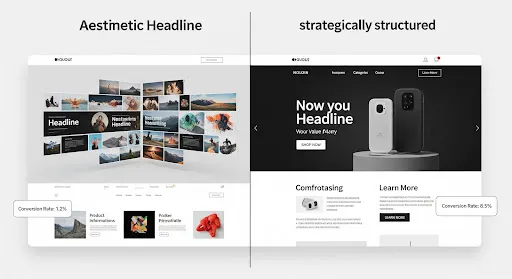
For decades, brands have equated great design with visual appeal. Sleek layouts, bold colours, modern typography; these have long been the benchmarks of a “successful” creative execution. Agencies have won awards, internal stakeholders have applauded polished campaigns, and websites have been hailed as “stunning.”
But here’s the uncomfortable truth: looking good does not automatically move the business forward. Clicks, leads, conversions, and revenue are not won by polish alone. They are earned when design communicates clearly, guides action, and aligns with a strategy.
At Purple Stardust, we’ve observed this gap repeatedly: brands investing heavily in aesthetics without understanding the real mechanics of conversion, engagement, or behavioural change. Beautiful design may capture attention, but without direction, it rarely translates that attention into measurable outcomes.
This guide unpacks why good-looking design often fails, what that costs businesses, and how organisations can shift toward design that delivers tangible results.
What “Good-Looking” Design Actually Means
When most brands evaluate design success, the criteria are primarily visual:
- Is the layout clean and organised?
- Are the colours vibrant and consistent?
- Does the typography feel contemporary?
Success is often measured in internal approval or aesthetic praise:
“The website looks stunning.”
“The campaign creatives got lots of applause internally.”
On paper, these may seem like achievements. But here’s the problem: they do not answer the most critical question a business should ask:
Did this design guide the audience to act?
For years, internal applause was sufficient. Today, in a hyper-competitive digital landscape, it’s dangerous. Design that only pleases the eye but does not influence behaviour fails the ultimate test: business impact.
Why Beautiful Design Often Fails

Several factors contribute to this paradox.
1. Legacy Thinking
Many brands are still trapped in the mindset that visuals are the endpoint of creativity. “Look amazing” is often the brief. This approach prioritises style over function, leading to campaigns that delight internally but underperform externally.
2. Metrics Disconnect
Design teams are frequently evaluated on awards, recognition, or peer approval rather than on tangible business outcomes. Success is measured by how the design looks rather than how it performs. The result is that decisions that may look good on the surface but overlook the audience’s journey, context, and real motivations.
3. Missing Feedback Loops
Visual decisions are rarely tested against real-world behaviour. Colours, layouts, and interactive elements are selected based on intuition or precedent, not data. Without measuring how design influences clicks, conversions, or engagement, organisations remain in the dark about what works. In other words, brands settle for applause, not results. And while applause feels good, it doesn’t pay salaries, convert leads, or scale business growth.
The Real Cost of Design Without Impact
Failing to connect design to performance has hidden but significant costs:
- High expenditure with low ROI: Brands invest heavily in creative development, production, and iteration, yet the financial return is minimal.
- Underperforming websites and ads: Visually striking assets may capture attention initially but fail to guide meaningful action.
- Repetition without learning: Teams replicate designs that “look nice,” perpetuating trial-and-error cycles without measurable insights.
- Decision-making without evidence: Leadership may approve campaigns based on aesthetics rather than performance metrics, undermining strategic clarity.
Most critically, without understanding why a design succeeds or fails, scaling success becomes impossible. If results are not measurable, you cannot replicate them. Every launch becomes a guess rather than a disciplined experiment.
The Shift: Design as a Business Tool

The solution is to connect design directly to business outcomes. The most effective brands today treat design not as decoration but as a decision-making lever.
In this approach:
- Every layout serves a purpose: Structure and hierarchy are intentional, guiding attention and behaviour.
- Every colour and visual cue is deliberate: Elements direct users to take meaningful action rather than simply creating appeal.
- Every visual decision aligns with strategy: Creativity is evaluated for impact, not just for aesthetic value.
When design is treated this way, it becomes a leadership tool, informing business decisions rather than merely delighting the eye.
How to Make Design Measurable and Purposeful
Too many brands have visuals without visual intelligence. Purposeful design requires intention, iteration, and measurement.
1. Prioritise Clarity Over Decoration
A polished design is useless if users don’t know what to do next. Clear hierarchy, readable typography, and intuitive navigation should always come first. Beauty is a vehicle, not a destination.
2. Use Design Systems That Learn Over Time
Scalable design relies on consistent systems: component libraries, UI patterns, reusable templates, and brand guidelines. But these systems should not be static. By incorporating learnings from testing and analytics, they evolve—ensuring that design decisions are informed by real-world results.
3. Measure and Iterate
Every design decision should be validated against performance. A/B testing layouts, monitoring scroll behaviour, tracking conversions, and observing click-through paths provide actionable insights. The goal is continuous improvement, where data informs creativity and ensures each iteration delivers greater impact.
By combining clarity, systemisation, and feedback, design becomes a replicable and measurable growth driver rather than a one-off aesthetic exercise.
Real-World Application: Design That Converts
Consider a subscription-based lifestyle brand. A website redesign focused initially on clean aesthetics and award-winning imagery. While stakeholders loved the visuals, subscription rates remained flat.
Purple Stardust reframed the brief. Instead of asking “How should it look?” we asked: “What decisions do we need users to make?” By mapping the audience journey and prioritising conversion touchpoints, the team redesigned layout flows, optimised call-to-action placement, and introduced visual cues that guided behaviour. The result: the same brand, the same aesthetics, but with a measurable increase in sign-ups and engagement.
This example highlights the principle: design must communicate, persuade, and guide not just impress.
Conclusion
Beautiful design is comfortable. It feels safe. It wins awards. But comfort doesn’t scale, and applause doesn’t convert.
The next decade of digital marketing will reward brands that ask the right questions before launching a campaign:
- “Does this design guide the audience to act?”
- “Does every element support a business objective?”
- “Are we measuring the impact of every visual choice?”
When brands shift from “How does it look?” to “What does it make people do?” they unlock the full potential of design as a growth lever.
At Purple Stardust, we specialise in transforming aesthetics into impact. We create design systems that are visually compelling, strategically aligned, and measurable. Our approach ensures that your creative investments do more than impress; they drive conversions, strengthen engagement, and scale business results.
If your organisation is ready to move beyond beauty for beauty’s sake and start designing for measurable outcomes, it’s time to reimagine your approach to creative design. Let’s build campaigns that not only look exceptional but also deliver real, quantifiable business growth.

