
The Evolution of the Creative Agency in Nigeria
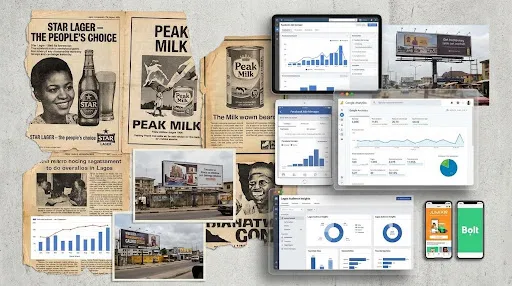
Nigeria’s creative industry did not arrive fully formed. It was built, argued over, reinvented, and ultimately transformed by a generation of practitioners who refused to accept that world-class creative work could only come from somewhere else. The story of the creative agency in Nigeria is, in many ways, the story of the country’s commercial ambition.
To understand where the industry stands today, and why the rise of the growth-focused creative agency in Lagos represents something genuinely significant, you need to trace the arc from the very beginning.
A Timeline of Transformation
1960s to 1970s — The era of multinational transplants
The earliest formal advertising agencies in Nigeria were extensions of global networks. Lintas, Grant Advertising, and a handful of others set up Lagos offices to serve multinational consumer goods clients. The creative work was largely adapted from international campaigns, with Nigerian-specific adjustments that were often superficial. Strategy, budgets, and creative standards were set in London or New York. Lagos was a market to be entered, not a creative culture to be respected.
1980s — The first wave of indigenous agencies
A generation of Nigerian practitioners who had trained within multinational agencies began striking out independently. Rosabel Advertising, STB-McCann, and others built agencies that were Nigerian-led and Nigerian-owned. This era produced the first real debate about what a creative agency in Nigeria should sound like, look like, and stand for. The question of cultural authenticity entered the industry conversation for the first time.
1990s — Consolidation and the television era
Television advertising became the dominant format. Agencies that could produce compelling TV commercials grew quickly. This period also brought the first serious engagement with Nollywood, a cultural force that would later reshape how Nigerian brands think about storytelling. Audiences became more sophisticated. Clients became more demanding. The relationship between creative work and commercial outcomes started to be discussed more openly, though measurement tools remained crude.
2000s — The telecom revolution changes everything
The deregulation of Nigeria’s telecommunications sector in 2001 unleashed the largest single injection of marketing spend the country had ever seen. MTN, Glo, Airtel, and others competed aggressively for consumer attention. This created both an opportunity and a pressure test for Nigerian agencies. Could they produce world-class creative at scale and at speed? Many could. The agencies that rose to this challenge built reputations and capabilities that they carry to this day.
2010s — Digital disruption and the fragmentation of the agency model
Social media arrived and broke the traditional agency model. Suddenly, brands needed content at volumes and speeds that full-service agencies were not built for. A new generation of boutique digital studios, content creators, and social media specialists emerged across Lagos. This era also brought the first serious use of performance data in creative decision-making. Agencies that adapted thrived. Those that clung to traditional structures struggled.
2020s to now — The growth-focused era
The defining development of this decade has been the convergence of creative excellence and commercial discipline. The agencies leading the industry today are those that have built integrated capabilities across brand strategy, creative production, digital performance, and data analytics. The growth-focused creative agency in Lagos is not a niche product. It is the industry’s answer to what clients have always wanted but could not always articulate: creativity that pays for itself.
What Drove the Shift Toward Growth and ROI

The evolution was not accidental. Several forces converged to push the Nigerian creative industry toward its current orientation around growth and measurable outcomes.
The democratisation of data
When digital platforms gave brands real-time visibility into campaign performance, the question “is this working?” became unavoidable. Agencies that could answer it with data found themselves in a structurally stronger position than those that could only offer aesthetic confidence. The data revolution rewarded agencies that had built analytical capabilities alongside creative ones, and it punished those that had not.
The rise of the Nigerian consumer
Nigeria’s growing middle class has become one of the most brand-conscious consumer populations on the continent. Lagos consumers in particular are globally connected, digitally native, and acutely aware of how brands communicate with them. They can tell the difference between creative work that understands their lives and work that merely references their culture as a styling choice. This consumer sophistication raised the bar for what counts as effective creative, pushing agencies toward more rigorous insight-gathering and outcome measurement.
Economic pressure sharpened client expectations
Periods of economic tightening in Nigeria, including currency pressure, inflation cycles, and the disruptions of the early 2020s, made marketing budget holders far more demanding. ROI conversations that might once have been occasional became standard in every agency relationship. The clients who stayed with their agencies through these periods were those who felt their creative partners understood the business pressure they were under.
“The shift toward ROI-focused creative agency work in Nigeria was not led by agencies. It was led by clients who needed more from their creative partners than beautiful campaigns. The agencies that listened built the industry that exists today.”
The Lagos Advantage in the Modern Creative Landscape
Lagos has always been the engine room of Nigeria’s creative industry. But what makes it particularly well-positioned in 2026 is the unique combination of scale, diversity, and energy that no other Nigerian city can replicate.
The Lagos market forces creative agencies to be generalists and specialists simultaneously. A creative agency in Nigeria serving Lagos clients must understand the premium consumer in Victoria Island and the mass market consumer in Alaba. It must produce work that lands on TikTok and on roadside billboards. It must navigate the cultural references of Afrobeats, Nollywood, street culture, and corporate Nigeria. This complexity, demanding as it is, produces agencies with an extraordinary range of creative and strategic capability.
The growth-focused creative agency in Lagos has been forged in this environment. The agencies that have survived and thrived in this market can operate across virtually any consumer context, any channel mix, and any creative format. That versatility, combined with a new generation of performance discipline, makes them genuinely competitive on any global stage.
Afrobeats, Nollywood, and the global export of Nigerian creativity
One of the most significant developments of the past decade has been the global recognition of Nigerian creative culture. Afrobeats has become a dominant force in global music. Nollywood is the world’s second largest film industry by output. Nigerian fashion, food, and design sensibilities are influencing global aesthetics in visible ways. For a creative agency in Nigeria, this cultural moment is both an opportunity and a responsibility. The world is watching. The standards, and the stakes, have never been higher.
Where the Industry Is Heading

The trajectory of the Nigerian creative industry points clearly toward continued convergence between creativity, strategy, and measurable commercial impact. The agencies that will define the next decade are those building genuine capability in three areas simultaneously.
First, cultural intelligence. Understanding how Nigerian consumers think, feel, and make decisions, across the full spectrum of income levels, age groups, and regional identities, remains the most defensible competitive advantage a Lagos agency can have.
Second, data infrastructure. The agencies investing now in analytics platforms, testing methodologies, and performance reporting systems are building operational advantages that will compound over time. Creative excellence without data infrastructure is increasingly a fragile proposition.
Third, talent. Nigeria has extraordinary creative talent. The agencies that attract and retain the best strategists, copywriters, art directors, and data analysts will win. In a competitive market for skilled professionals, agency culture, compensation structures, and opportunities for growth matter as much as the quality of the client roster.
The creative agency in Nigeria has come a long way from the multinational transplants of the 1960s. What it is becoming, in its best contemporary form, is something that neither London nor New York invented: a genuinely African model of growth-focused creative excellence.
Frequently Asked Questions
When did creative agencies in Nigeria first become truly independent from multinational structures?
The first meaningful wave of truly independent, Nigerian-led creative agencies emerged in the 1980s…
How has digital media changed the creative agency model in Nigeria?
Digital media fundamentally broke the traditional full-service agency model…
What makes a growth-focused creative agency in Lagos different from agencies in other Nigerian cities?
Lagos agencies have been shaped by the sheer complexity and scale of the Lagos market…
Is the Nigerian creative industry globally competitive in 2026?
Increasingly, yes. Nigerian agencies are winning at Cannes Lions, the Loeries…
How should a brand evaluate whether a Nigerian creative agency is truly ROI-focused?
Ask for case studies that tie creative decisions directly to measurable business outcomes…
What is the future of the traditional full-service creative agency in Nigeria?
The model is evolving toward integrated creative and performance capabilities…
Conclusion
The story of the creative agency in Nigeria is one of continuous reinvention. From multinational transplants to indigenous pioneers, from television to digital, from creative instinct to data-informed strategy, the industry has never stopped evolving.
Today’s growth-focused creative agency in Lagos is the product of that entire journey. It carries the cultural intelligence of decades of working in one of the world’s most complex consumer markets, now combined with the commercial discipline that 2026 demands. That combination is rare anywhere. In Nigeria, it is being built right now.
If your brand is looking to work with a partner that reflects this new standard, Purple Stardust represents that next phase of the Nigerian creative industry. Built for a landscape where strategy, creativity, and performance must work as one, Purple Stardust helps brands translate cultural relevance into real, measurable growth.
Contact us here to partner with a creative agency built for where the industry is going, not where it has been.
